

Coffee processing methods of the world's top coffees is achieved by many different methods. These processing techniques can be grouped into four categories: Wet Processing (Washed), Dry Processing (Natural, Sun Dried), Pulped Natural Processing, and Semi-Washed Processing.
Farmers choose the processing method best suited for their climate and capabilities - whether they have a long, dry season to allow for dry processing, or ample water supply because of a high tropical environmental, and how much labor they have access to.
Here's a quick guide of all of these coffee processing methods, with detailed explanations linked out.
- Wet Processing involves washing the coffee beans of fruity material while the beans are still moist right after they are picked.
- Dry Processing involves first drying the coffee cherry in the sun while regularly raking the beans free of any dried fruit.
- Pulped Natural Processing involves initially pulping the coffee but without a fermentation stage as in Wet Processing, then drying the beans with much of the mucilage still attached.
- Semi-Washed Processing method a demucilaging machine is used to remove the coffee cherry's skin and most of the mucilage.
- Aquapulp is another method which cleans the coffee cherry initially and has recently been adopted by many areas that formerly used wet processing.
Once the coffee beans are processed they are usually bagged in 100-pound, 132-pound or 154-pound coffee sacks and sold on the world market as green coffee beans (milled, but not yet roasted).
Wet Process
The wet processing method (washed) involves soaking the coffee cherries and allowing fermentation to take place to separate the cherry from the bean - or it can be run through a mechanical depulper to remove the coffee cherries. Once the green coffees are removed, they're washed once again to remove residue and placed outside to dry on a patio or raised beds.
The flavor of the resulting coffee is more "pure" than other methods - unaffected by the coffee cherry.
Dry processing
Dry processing is a type of coffee processing that involves drying the freshly-picked coffee cherry (fruit) in the sun on large patios for a period of time while repeatedly raking and turning the drying cherry until the green coffee beans are generally free of any dried fruit and the moisture content is about 10.5%. Mechanical dryers may be used instead of sun-drying.
The dried fruit is then either disposed of as waste, or if facilities exist, there is now the option of processing it into a coffee flour.
While the coffees gain unique flavors through this process, it's also a risky bet - a minimum of 2 weeks without sun is needed to allow for drying. Rain or high humidity leads to the develop of molds and fungus and can ruin a harvest - sometimes a farmer's entire income.
Dry processed coffees tend to not have a huge range of flavor, because the flavor is always pushed towards fruity and sweet due to the coffee cherry. Dry processing is especially prominent for coffees from Brazil, Ethiopia and Yemen.
Another key consideration is the quantity of water used - dry processed coffees may use as little as a gallon per kilogram of dried parchment, while wet processing requires closer to 10 gallons for the same quantity.
The resulting product is known as coffee parchment (pergamino; pergaminho). The remaining fruit remnants on the dry processed coffee cause the brewed coffee beverage to have more body, though wet processed (washed) coffees tend to have a more desirable level of acidity.
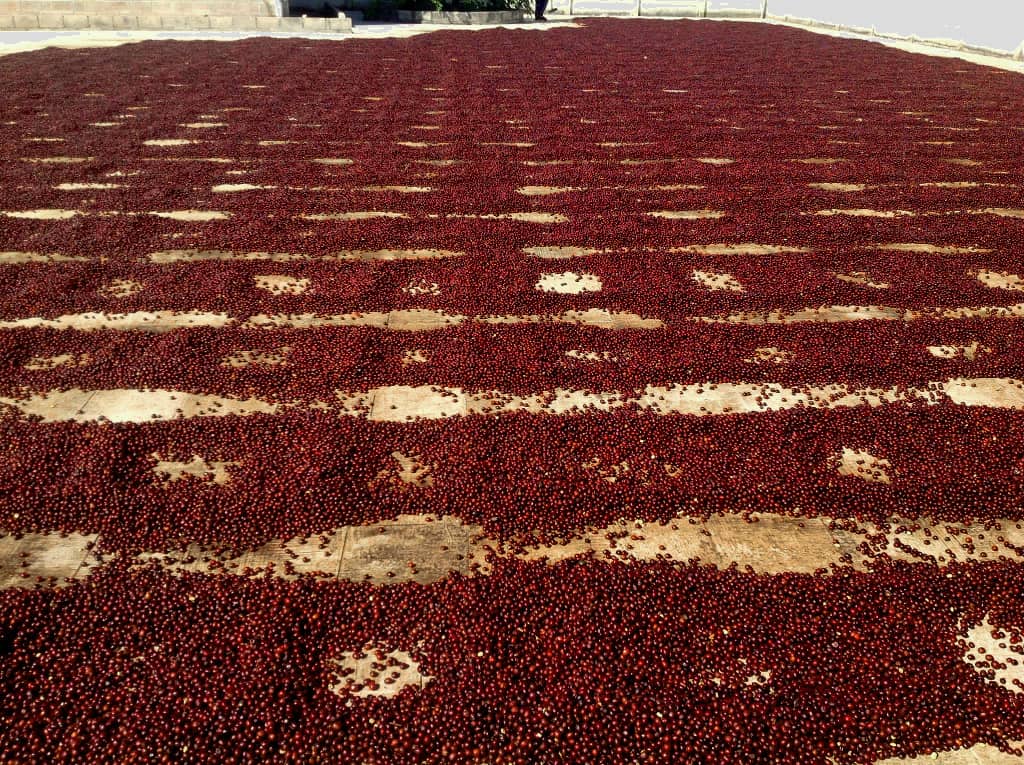
A benefit of the dry processing method is that the brewed coffee will tend to have more body than wet-processed coffee due to the fruit remnants left in with the coffee beans.
Many coffee connoisseurs consider wet-processed coffees superior to dry unwashed (dry-processed; natural) coffee, but this is clearly a matter of personal preference.
Dry processing is also known as "pulped natural", "semi washed", "dry milled" or "honey coffee".
Pulped natural / semi dry / honey process
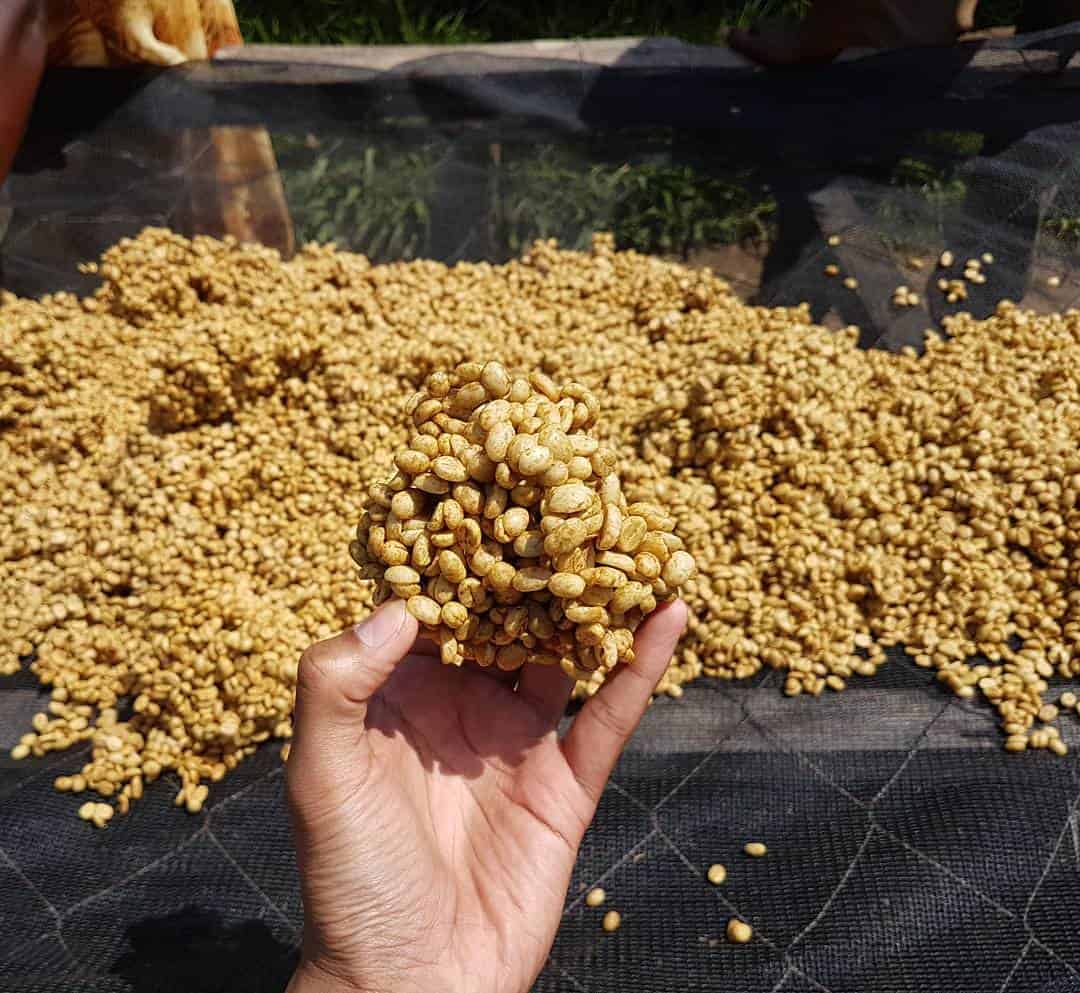
The pulped natural or "semi dry" process involves removing varying portions of the coffee cherry - it is somewhere between Wet Processing and Dry processing. Recently, these varying levels have become known as "black honey", "red honey" and "yellow honey" respectively - more of the coffee cherry left on the outside results in more caramelizing and a darker color. Conversely, less coffee cherry means less sweetness and a lighter color.
Wet hulled / Semi washed
With this method, coffees are pulped at the farm to strip the coffees down to parchment and mucilage, then sent to be processed at the processing facility. This is also known as "Giling Basah" (wet grinding) in Indonesian countries.
The processing methodology is typically passed down through generations within a country, with current farmers doing things fairly similar to what their fathers and grandfathers and so on did. Government organizations and international coffee organizations sometimes step in to provide alternate methods or share their techniques, which helps raise the standards across the industry.
Some methods are simply unavailable or too costly however - in areas where water is scarce or equipment unavailable, the processors may be limited in their options. While it's difficult to imagine in first world countries like Canada, the United States, United Kingdom and Australia, much of the coffee growing world is limited by a lack of knowledge as well as unavailability of basic equipment.
Pulping coffee
Pulping is usually done within 24 hours of harvesting the coffee cherry (fruit), and involves removing the outer flesh of the coffee cherry (the red skin and the mucilaginous pulp). This is usually done with a machine known as a pulper which uses rough rollers to loosen and break up the outer part of the cherry.
Demucilaging, drying, and hulling
Next the coffee cherry's mucilage is removed through fermentation by placing the cherry in a fermentation tank for 12 to 24 hours.
The coffee beans are then dried using either forced-air drying or spread out onto decks or patios (see hoshidana) to dry naturally in the sunlight (see sun-drying). When the drying is completed, the moisture content of the coffee beans is typically about 10.5%.
Hulling/husking is done with a machine called a huller, which mills off the parchment and the silverskin, and also polishes the beans, which at this stage are known as green coffee beans (milled but not yet roasted).
Aquapulp coffee processing
Aquapulp is the process of removing the freshly-picked coffee cherry's sticky pulp, or mucilage, through mechanical demucilaging, which utilizes machines to scrub the cherry.
The aquapulp process has gradually been replacing the traditional wet processing methods of removing the mucilage through fermentation and washing.
After the parchment is removed the coffee beans are sorted and graded based on local standards which vary in different regions. In general the beans are sorted into quality grades based upon size, shape, and other factors. (Also see Grading Coffee Beans.)
Grading coffee
Screens with graduated hole sizing helps complete the grading process. Vibrating air tables are also used, employing gravity to separate the beans by density and to isolate defective (e.g., hollow or nicked) coffee beans, which can harm the taste of the final product.
Coffee silverskin
Some coffee processors who sell whole green coffee beans leave the silverskin on the bean since it serves as a protective barrier and then crumbles off naturally as chaff during the coffee roasting process. Other coffee processors polish off the silverskin.
Roasting coffee
The final step in preparing coffee for consumption is roasting, which involves heating/cooking/drying coffee beans in a coffee roaster in order to transform the physical and chemical properties of the green coffee beans so the desired flavors and aromas of the final cup of brewed coffee can be achieved.
Coffee roasting eliminates most of the moisture in the coffee beans and begins a series of chemical reactions known as pyrolisis. These chemical reactions change the chemical composition of the coffee beans and develop the coffee compounds associated with the flavors and aromas of the brewed coffee.
The goal of the skilled roastmaster is to apply the proper roasting temperature for just the right amount of time to bring out the best flavors of the particular coffee beans being roasted.
Roastmasters pay close attention to the color level of the roasting coffee beans as they expand and their hue changes. The color of the roasting coffee beans ranges from very light to very dark, and as the coffee beans lose moisture their density also changes.
Coffee roasting, in various aspects and instances, creates, modifies, and/or stabilizes the fragrance of the coffee beans as well as the body, taste, sweetness/bitterness, acidity, and aroma of the brewed coffee.
Roasting
Coffee roasting machines
Roasting coffee requires skill as well as a proper coffee roaster. Many common roasting machines are heated with propane gas, using electricity to drive a drum. Roasting temperatures range from 370 degrees Fahrenheit to 540 degrees Fahrenheit (188 degrees Celsius to 282 degrees Celsius).
Roasting times vary from about 12 to 30 minutes, and the beans shrink about 20% by weight as they gain a dark hue and fragrant aroma. 25 of green coffee beans typically take about 15 minutes to roast, and 8 pounds of coffee cherry will make about 1 pound of roasted coffee (100 pounds of coffee cherry equals approximately 12 pounds of roasted coffee).
Fluid bed roasters
A Fluid Bed Roaster is a type of coffee roaster that agitates and roasts the green coffee beans using a column of hot air. The Fluid Bed Roaster, also called a Sivetz Roaster after Michael Sivetz who invented it, operates much the same as a popcorn popper.
Roasting time
Total coffee roasting time varies depending upon several factors including the quality of the coffee beans, their moisture content, and the grade of the coffee beans. Also affecting roasting time is the age of the coffee beans as well as the weather conditions where the coffee roasting is being done.
A primary factor in determining coffee roasting time is the type of roast required, ranging from Light Roast to Medium Roast to Medium-Dark Roast to Dark Roast.
The skilled roastmaster pays attention to the roasting time and temperature as well as more subtle considerations such as the appearance and fragrance of the coffee beans during roasting.
The roastmaster listens for the popping or cracking sounds of the roasting coffee beans - these distinct “cracks” occur at particular times during roasting. (See Roasting Coffee.)
Grinding
Once the coffee beans are roasted they are reading for grinding and then brewing.
Espresso and Coffee Brewing Tips
How a coffee is processed does have some affect on how a coffee is roasted, and master roasters use this information to tweak their roast profile.
For tips on brewing the perfect cup of coffee see the Espresso Coffee Guides section on coffee brewing. For detailed definitions of coffee terminology see the Coffee Terms. You can also read detailed specialty coffee flavor profiles see Gourmet Coffees and Espresso Drink Recipes.
Also check out the evolution of coffee and espresso recounted in detail in our World's Best History of Coffee.
Buy Gourmet Coffee Beans
- ✔️ Fresh roasted to order
- ✔️ 100% high qualtiy Arabica coffee
- ✔️ Custom grind (or whole bean)
- ✔️ 1-way valve, laminate bag (for freshness)
- ✔️ Bulk discounts
Rosa Rosario
thes Coffee is god