
When it comes to Hawaii coffee most people think immediately of Kona Coffee, and for a good reason. Kona coffee is rated as one of the world's top coffees and has a rich tradition with its many family-run coffee farms and with coffee trees now more than a century old.
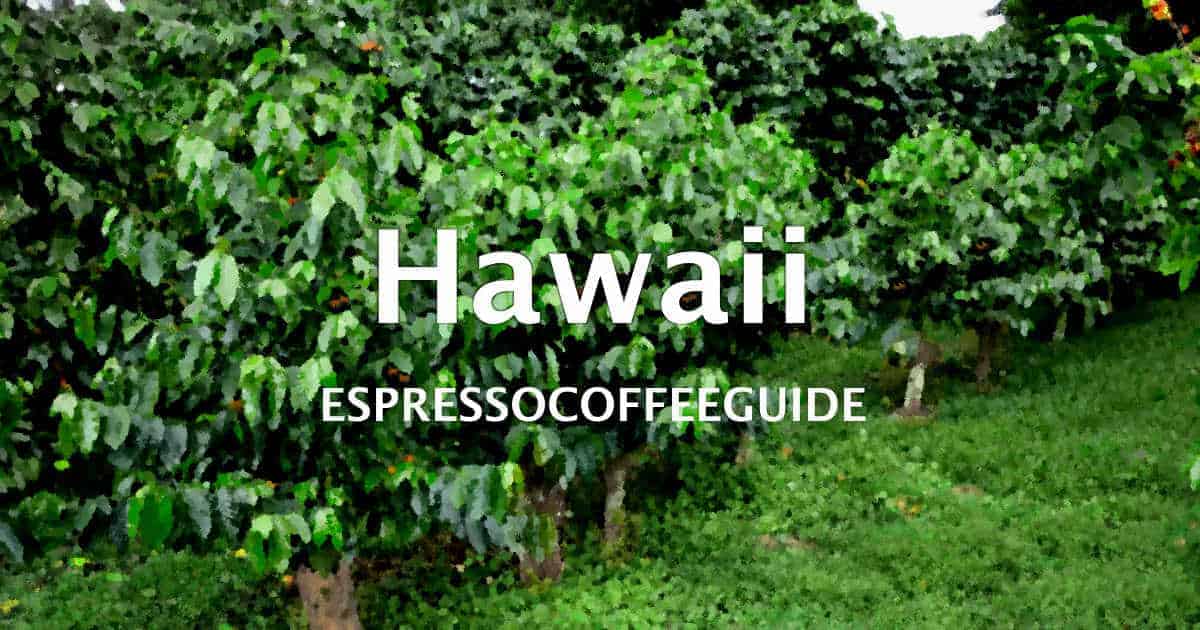
Many of the Kona coffee farmers are fifth-generation descendants of the pioneering Kona coffee farmers still working on the Kona farms today.
Kona is located on the southwestern side of the Big Island of Hawaii, and Kona coffee is one of the world's top-ranked specialty coffees, with reviewers calling it distinguished for its simple yet rich flavor, typically light, delicate and mild with a complex aroma and taste.
Reviews
In addition to Kona there are now other areas of the Big Island beginning to produce substantial amounts of green coffee beans, primarily for export. Some of these are demonstrating great potential to equal or exceed the quality of the Kona coffee beans.
These other Big Island coffee growing regions are located in Puna, Hamakua, Hilo and Kau and are mostly family owned and operated coffee farms.
On the other Hawaiian Islands there are also numerous coffee farms including two very large, mechanized coffee plantations, one on Kauai and one on Molokai. Another substantial coffee plantation is located on Oahu and covers about 180 acres overlooking the north shore of that island.
Buying
Due to being part of the United States, green coffee importers aren't typically needed to source the coffees. Being part of a first world country, Hawaii has access to internet and a large base of technically savy population. This means that farmers often wholesale and distribute their own branded coffees to the mainland rather than work through brokers.
The shipping portion is sometimes tricky, which makes fresh roasted coffees available only from the most committed online retailers. Others opt to roast their coffees, package and send it off to retail stores or distribution facilities such as Amazon, where it can sit for weeks or months before being sold. This is an absolute atrocity relative to the quality of Hawaiian coffees.
We always recommend buying whole bean coffees, which stay fresh longer than ground coffee, and buying direct from a coffee roaster who roasts the coffee to order and ships direct to you rather than a random brand through a marketplace.
Starbucks has even offered some Hawaiian coffees as part of their reserve program.
Organic
A respect for the island and nature overall is ingrained in Hawaiian culture, making the leap to Organic certified coffees more of a happy skip.
FAQ
The coffee may be harvested year round in the Hawaiian Islands, the primary season begins at the end of summer and may last until the beginning of spring. The number of harvests/crops that a coffee tree produces is tied to the number of rainfalls in the December - February season (Kona), with each rainfall causing flowering and subsequent coffee growth.
Hawaii is the only state that grows coffee in meaningful quantities, thanks to its unique tropical climate. Puerto Rico produces a fair amount of coffee, with a cost similar to Hawaiian coffee and has seen some decent independent reviews. This may be jeopardized thanks to extensive damage to infrastructure and farms from Hurricane Maria in 2017. There are some hobby-scale farms in Florida and California that produce a few hundred (into a few thousand) pounds yearly, but these aren't generally available on the national or international market and little is known about the quality.
The Kona region has between 650 and 700 coffee farms, most just three to seven acres in size. With the decline and then complete end of the sugarcane era in the Hawaiian Islands there has been a recent move toward planting coffee as an alternative agricultural crop in many areas other than Kona. The other coffee farms on the Big Island include farms in the districts of Kau, Puna and Hamakua (about 40 farms) and on the other Hawaiian Islands (about 50 farms) including coffee farms on Oahu, Maui, Molokai and Kauai. The three biggest coffee farms in Hawaii include a 4,000-acre coffee plantation on Kauai, a 500-acre plantation on Molokai, nearly 200 acres on Oahu, and a 500-acre plantation on Maui.
This varies depending on the coffee grade you're looking for. Lower-grade coffees can be found around $20 per pound roasted, and higher-grade coffees are typically $35-$40 USD/lb. Lower prices as close as $30/lb can be achieved by buying larger quantities (5-10 pounds). Kona certified green coffees will be $15-$25 USD/lb depending on grade and whether shipping is included or not. Because of a lack of traceability, "Kona Coffee" sold on roadsides in Hawaii, and sometimes from distributors outside of Hawaii, is not actually certified Kona but a low-grade Hawaiian that doesn't technically qualify as Kona. If you're buying "Kona Coffee" at $20 or less, you're probably buying mis-labeled coffee that isn't Kona certified.
Generally, Kona coffees are a high-quality coffee that should be roasted medium to bring out the best flavors, or medium-dark depending on your personal taste preferences. Unless roasted very dark by your request, coffee sold as "Kona" that are very dark are usually low-grade coffees that have been over-roasted to mask the defects (insect damage, mold, over-ripe, under-ripe).
Total acreage of coffee grown in Kona is about 2,000 acres, while the total coffee acreage in Hawaii overall is about 7,800 acres and more than half of that is on islands other than the Big Island of Hawaii. The Big Island has about 790 coffee farms while the other islands only have about 40 farms including two very large coffee plantations, one on Molokai and one on Kauai.
Coffee farms in Hawaii produce about 1,400 pounds of coffee per acre per year on average. A three to five acre Hawaii coffee farm may yield about 20,000 to 40,000 pounds of coffee fruit, which is known as coffee cherry. An average tree will produce about 22 lbs of coffee cherries, at a 14% cherry-to-green-coffee-bean yield (~3.5 lbs/tree). The State of Hawaii currently produces about seven to nine million pounds of green coffee beans (unroasted coffee beans) each year in 2010. As of the 2013/2014 season, this was 6,794,700 pounds of green coffee according to hawaiicoffeeindustry.com.Coffee farms in Hawaii produce about 1,400 pounds of coffee per acre per year on average. A three to five acre Hawaii coffee farm may yield about 20,000 to 40,000 pounds of coffee fruit, which is known as coffee cherry. An average tree will produce about 22 lbs of coffee cherries, at a 14% cherry-to-green-coffee-bean yield (~3.5 lbs/tree).
Kona
Since the late 1800s coffee has been cultivated in the Big Island's Kona region along the lower slopes of Mauna Loa and Hualalai volcanoes.
There are more than 650 independent coffee farms in the Kona region and they are located at elevations ranging from 500 feet to 3,000 feet above sea level. The Kona Coffee Belt, as it is often called along with Kona Coffee Country, is only about one to three miles wide but stretches for about thirty miles in length.
The high quality of the beans, higher price, and distinct flavors means that Hawaiian coffees are often blended. These blends may either contain no Hawaiian Kona beans themselves, or sometimes as low as 10%-20%, and are then filled with a mixture of other origins that approximate the taste and flavor.
We have a page dedicated entirely to Kona Coffee Beans with more information.
Festivals
Every spring the Kau region holds the Kau Coffee Festival, and every fall the Kona region hosts the Kona Coffee Cultural Festival. All year around you can enjoy Kona Coffee Farm Tours.
Big Island
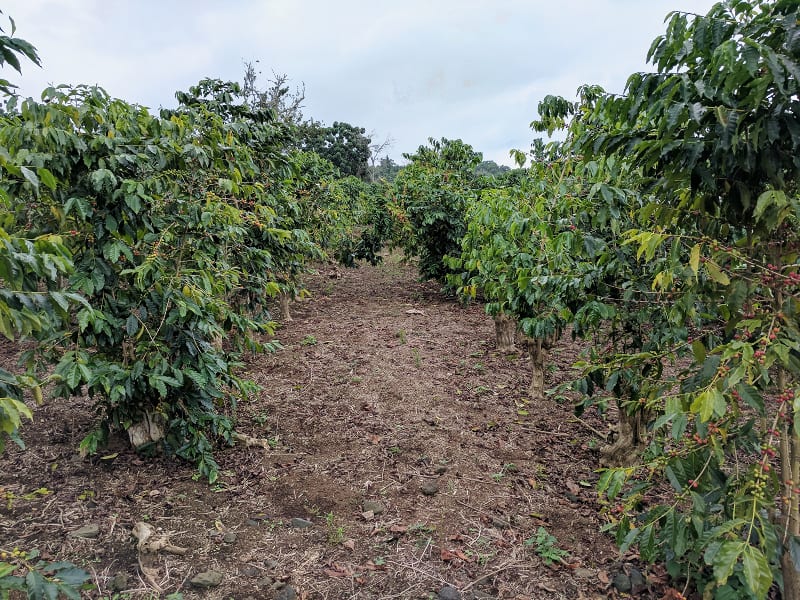
When it comes to Big Island coffee most people think immediately of Kona Coffee which has long been regarded among the world's top specialty coffees. Several other areas of the Big Island are now producing fine coffee.
These emerging Big Island coffees include Kau Coffee and Puna Coffee (to the southeast of Kona) and Hamakua Coffee and Hilo Coffee (on the island's northeast side). Most of these coffee farms on the Big Island are family owned and operated, and typically follow the methods of Kona in which the coffee cherry is hand picked at peak ripeness.
Puna
There are now more than three dozen coffee farmers in Puna who have planted more than 125 acres of coffee. Puna is located on the southeast side of the Big Island of Hawaii, and is the newest of the Big Island's emerging coffee regions.
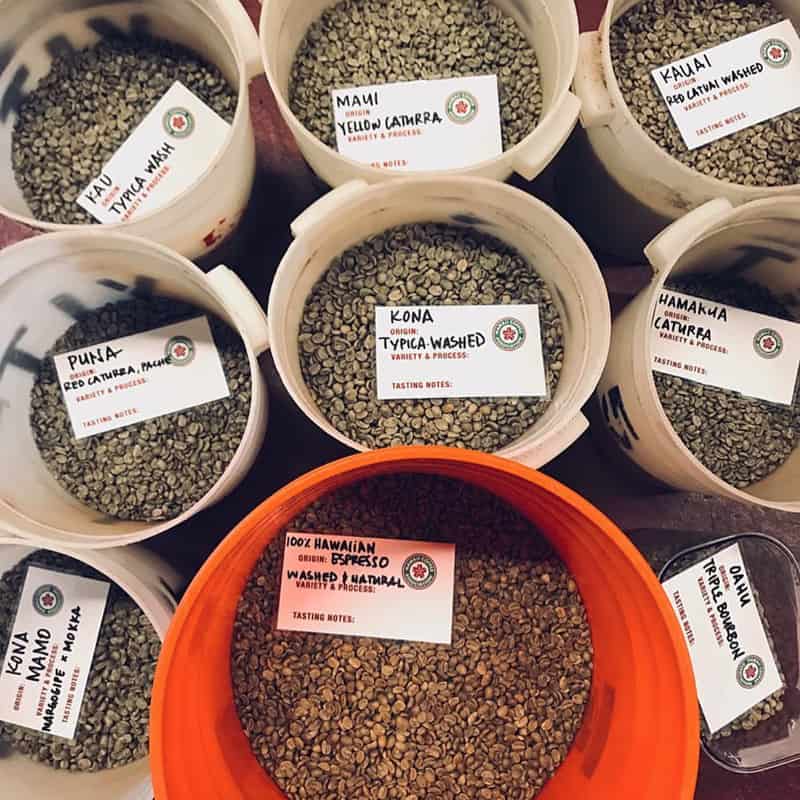
Coffee plant varietals grown in Puna include primarily Typica and Caturra along with a lesser number of Moka coffee plants. Most of the coffee is grown in the Hawaiian Acres area of Puna and most of the farms are only about three acres. Farm elevations range from about 1,000 feet to 2,500 feet above sea level.
About 50,000 pounds of coffee cherry (coffee fruit) are now grown in Puna each year which translates to about 10,000 pounds of roasted coffee. This number may increase significantly by 2012.
Coffee cultivated in Puna is distinguished for its full body and nutty overtones. A medium roast gives the coffee a heavy character that has been compared to Yemen Mocha Coffee. See Puna Coffee.
Hamakua
The Hamakua district is located on the Big Island's northeast side and coffee farms average about six acres in size, totaling about 150 acres in all. The coffee farms of Hamakua are located from 350 feet above sea level to 2,000 feet above sea level. The coffee is distinguished for its rich flavor with a smooth finish displaying tones of chocolate.
Hilo
More than five acres of coffee are being cultivated in Mountain View near Hilo at the site of the Hilo Coffee Mill. A tour includes the processing and roasting areas, and there is also a store, coffee and tea tasting at the Latte Da Bar, and freshly prepared food along with a full menu of specialty coffee drinks, milk shakes, ice cream, and breakfast and lunch items - and a nice lanai for relaxing.
Ka'u
Kau coffee is grown on the southern slopes of Mauna Loa volcano. Coffee farms in Kau average about five acres in size, and the coffee from this region has made some great showings at Coffee Cupping (professional coffee tasting) events and contests. Kau also celebrates an annual Kau Coffee Festival every spring.
Kau coffee is distinguished for its smooth taste with a distinct and very pleasant aroma. The coffee is sweet and aromatic with a nice vibrancy that displays floral notes of orchids and citrus flowers, often providing deep chocolate flavors along with cherry and coconut.
Among the notable achievements of Kau coffee is its sixth place finish in the respected annual international Cupping contest held by the Specialty Coffee Association of America (SCAA). The region produces about 400,000 pounds of green coffee beans (unroasted coffee beans) annually.
Grant Petersen says
I am writing hoping that this will reach the correct person that I may need to speak to in reference to becoming an authorized dealer of your product. Looking forward to hearing from you. Thank you for your time.
Grant Petersen